Dalmatia
Where to go ?
♦
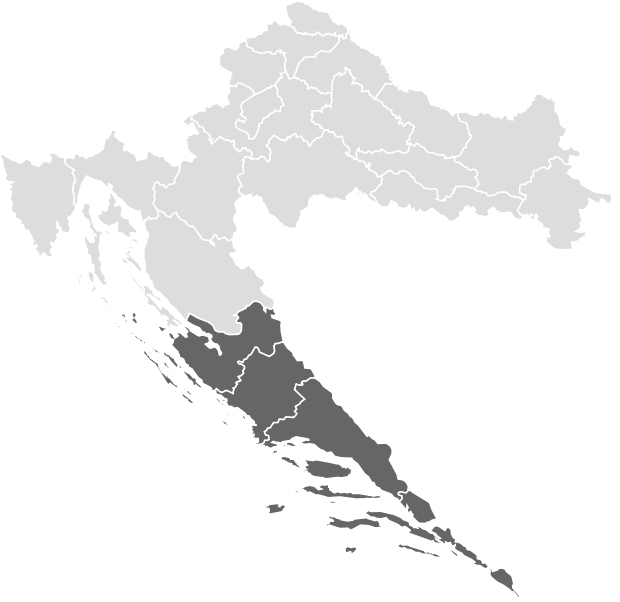
With the intense blue of sea, the lush deep greens of pine and olive groves and the pure white of Dalmatia stone, the Dalmatia region’s color palette is extraordinary. It is as well an area with a long and rich tradition, history and culture. This region with Mediterranean climate is located on the south of Croatia, full of nature beauties since there you can find even 4 National Parks (Krka, Paklenica, Kornati, Mljet), 4 Nature Parks (Telašćica, Lastovo Islands, Biokovo, Vrana Lake), 969 islands, islets and reefs (what represent 78% of total island in the Croatian Adriatic Sea), and 7 Lakes!
The unique combination of natural beauty enriched by antic, old-Croatian, Romanesque and local folk architecture, which is reflected along the coast and islands in the small towns and urban centers, offers guests a variety of opportunities for rest and fun, a silence but also noisy Mediterranean nights wrapped in the warm breeze of the South.
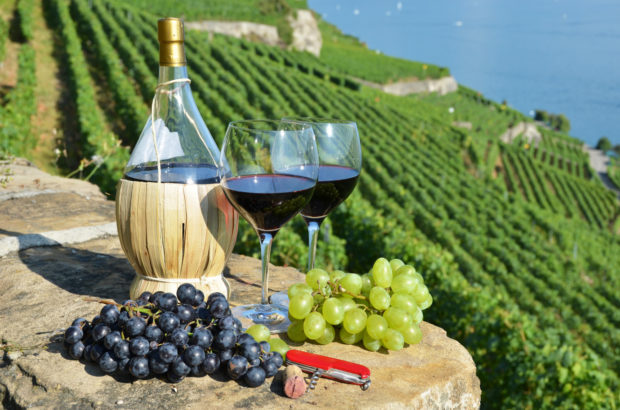
Explore the diversity of Dalmatian cuisine and discover its wonderful specialties. Aperitifs such as the world famous Maraschino of Zadar, starters such as cheese from Pag, the most highly-prized cheese in Croatia, soaked with flavours of Mediterranean plants or wonderful Dalmatian prosciutto, oysters and mussels from Ston, black risotto, delicious grilled fish, salted anchovies, delicacies such as eels and frogs from the Neretva Valley, pašticada from Split, delicious Soparnik, meat from peka and desserts like pudding Rožata and Kotonjata, sweet dried Dalmatian figs, kroštule or fritule are among the many dishes in an unforgettable Dalmatian menu that will conquer your senses. Let us introduce you to Dalmatian vineyards to taste excellent wine on island of Hvar or Pelješac peninsula.
One of the icons of the Mediterranean culture is olive oil - it has been a fundamental ingredient of Dalmatian cuisine for centuries. Discover its great gastronomic value and healing properties! On your tasteful journey through Dalmatia, you will learn about food preparation practiced for centuries until today – and will enjoy every second of it! All of it will fill your soul until your next visit in the heart of Adriatic – a destination of everlasting inspiration!
On the entrance of Northern Dalmatia there is the island of Pag, with coastal length of 270 km, which makes Pag the most indented island in Croatia where a numerous magnificent gravelly beaches ranging from rocky coastlines to finest sand can be found. Pag is known as a city of lace, cheese, lamb and salt. Pag lace, called the ''white gold'' of the town od Pag, is on UNESCO's List of the Intangible Cultural Heritage since it is unique handicraft made by valuable and skilled hands of woman from Pag
Lun, the northernmost place on the island of Pag is a natural reserve of olives - The Olive Gardens, since there are growing about 80 000 centuries-old olive grove . This area of wild olives, which covers 24 hectares of space, is the only one of its kind in the Adriatic Sea region and it has great botanical value. Pag is known for its production of cheese from sheep's milk. There are two big producer where you can learn about production and enjoy the cheese tasting with beautiful view on the island. Entertainment on Zrće. Pebble beach in Zrće is maybe the most beautiful beach in Pag. Located in the Bay of Zrće, it is Croatian Ibiza where unforgettable parties last 24 hours a day in the most popular clubs on the beach organizing summer festivals all summer long that include very famous names
Pag is connected to a mainland with bridge and very soon you can reach Zadar, as a main city of Northern Dalmatia. It is a city of exceptional history and rich cultural heritage. As an ancient three thousand years old city, built in the center of the Croatian Adriatic, it is full of historical and cultural monuments. In 48 B.C. Zadar became a colony of Roman citizens. Created around the Roman forum, inside well-kept walls you can find many preserved monuments of various historical times and cultures. There is the oldest University among Croatians (1396), the church of the Holy Trinity, today St. Donat, for which it can be said that is the symbol of the city and the most famous example of early medieval Croatian architecture, unique in Europe. Don’t miss to enjoy Zadar´s exceptional sunset for which inscription was written by the famous Alfred Hitchcock when he visited Zadar in May, 1964, as well as Sea Organ - a unique architectural achievement, architectural wonder built recently in the underwater part of the city's waterfront. From Zadar, you can take a boat tour to some of simply magical islands of Zadar archipelago, like Dugi otok, Ugljan, Pašman or small islands like Iž, Sestrunj, Rivanj, Molat, Silba,Olib, Ist, Rava, Premuda
Nearby Zadar, there is a small town of Nin – known as the place where the Croatian state was born – the oldest Croatian royal town. A widely known symbol of Nin is the Romanesque church of St. Nicholas from 11th/12th century, built on a hummock, as a sign of his royal power, was used as the coronation church. Two National Parks can be found in Northern Dalmatia: The Kornati National Park, often mentioned as "nautical paradise" due to the 89 unforgettable islands, islets and reefs, covering 217km2 and with 2700 sunny hours per year. With their raw beauty, they remained intact of the development of the modern time. Located between two quite different areas, the northern Adriatic, and the southern Adriatic, Kornati islands were populated in prehistoric times and today it is an archipelago with the highest density on the entire Mediterranean where highest cliff is 82m high. The Kornati form part of Telašćica Natural Park. Boasting the safest, most beautiful and largest natural port on the Adriatic, the scenery is characterised by rocks plummeting into the sea from a height of 160 metres and the only saltwater lake on the Adriatic, Lake Mir. Second National Park is Paklenica National Park, proclaimed due to its unique natural features, magnificent forests and extraordinary geomorphologic structures
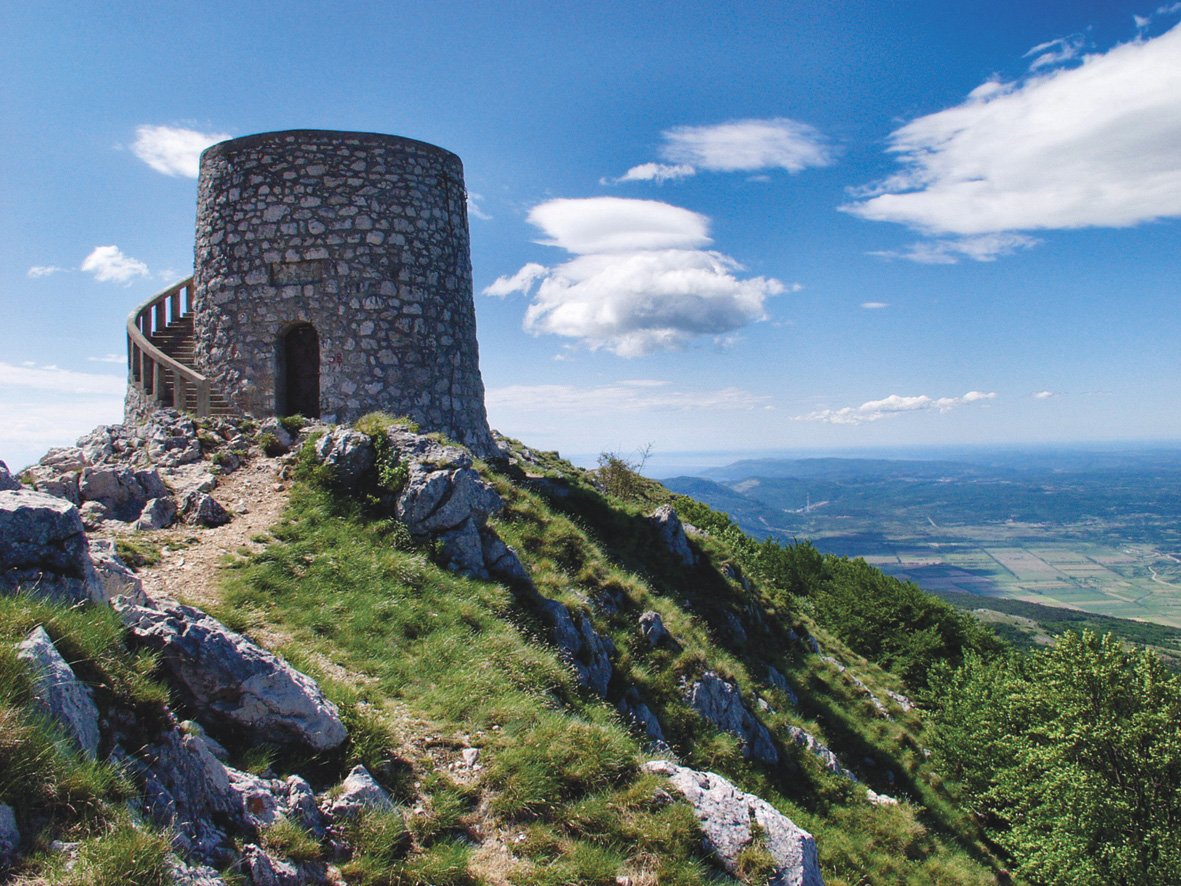
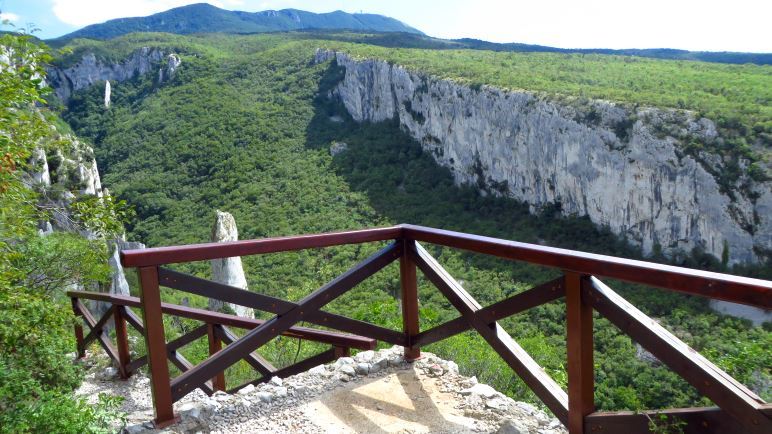
Distinctive features of Paklenica National Park are autochthonous forests of black pine, several types of beech forests and deep canyons with torrent flows of Velika and Mala Paklenica. Wider area of Paklenica National Park prides itself with rich and diverse cultural heritage. Its educational and hiking trails are waiting for you!
Further South, you will reach the Central Dalmatia with Split as the main city. On the way to Split, you can visit Skradin , a protected cultural heritage monument, a romantic Mediterranean town with narrow cobbled streets, passages, arches and stairs and is located at the entrance To Krka National Park – natural and karst phenomenon. Take the opportunity to discover these wonderful waterfalls by walking over the wooden bridges. Discover its seven travertine waterfalls at a total height of 242 metres and the Skradinski Buk, the largest travertine barrier in Europe and visit the island of Visovac with its Franciscan church and monastery.
In the historic town of Šibenik , located in central Dalmatia where the river Krka flows into the Adriatic Sea, you should not miss to see the form and the decorative elements of the the Cathedral of St James, UNESCO World Heritage Site , built entirely from stone using unique construction techniques , such as a remarkable frieze decorated with 71 sculptured faces of men, women, and children, also illustrate the successful fusion of Gothic and Renaissance art.
There are beautiful islands and islets adorn the crystalline waters of the Šibenik region, so you can take a private sailing boat tour, sail through islands of Šibenik archipelago and visit small islands and Dalmatian villages living the Mediterranean as it once was: Prvić, Zlarin, Krapanj, Kaprije, Žirje…One small island is gaining notable attention on global scale - Baljenac, an isle that has no more than 0,14 square meters in size, but it is almost completely covered with hand-built drywalls. In the hinterland of Šibenik stands one of the biggest and most significant defensive strongholds - Knin Fortress , built between the 9th and 10th century near a devastated Roman settlement.
This military fortress was shaped by the early Croatian cultural heritage and is found on the southern side of Mount Spas, which dominates Knin and its surroundings and offers breathtaking views on all sides. Between Šibenik and Split, two beautiful towns can be found: Primošten , which covers part of the peninsula which is mentioned by many ancient sources, Primosten offers beautiful beaches, ancient stone houses and churches, narrow streets decorated by different Mediterranean plants. You can take a walk by the promenade with an unforgettable sunset and enjoy different gastronomic offers.
On yur way to Split, don’t miss to stop in beautiful Old town surrounded by walls – Trogirs, since its historical core is UNESCO World Heritage Site.
Walking through the streets of Trogir is like travelling to the time of Grecians, Romans and Venetians.
Numerous palaces and houses have been preserved, mostly dating back to the 13th century AD.
Kaštela , a city nestled between Trogir and Split, is city comprised of 7 historical settlements eveloped around the sea and connected to each other by a wide boardwalk. It is a homeland of Zinfandel since every drop of this fine nectar has a bit of Kaštela history in since DNA analysis has revealed that it is genetically equivalent to the Kaštela’s grapes Crljenak Kaštelanski, which finally solved the mystery of the origin of this most popular variety in the United States. At the turn of the fourth century AD, emperor Diocletian has built his home in the heart of the region of Dalmatia, setting the first stones in place for the future city of Split . Ancient Diocletian Palace in Split forms about half the old town and the entire historical core is UNESCO World Heritage Site ever since 1979. All historical layers from the old Rome, middle ages till today are still visible and alive in this structure. A walk through the ancient city takes you through time, along the great examples of ancient architecture like Peristyle, the middle aged Romanesque Church, Gothic Palace, and many others.
Nearby Split, you can visit the ancient Salona – 2000 years old ruins of an ancient city Salona, capital of Roman province on the Dalmatian coast and Klis fortress – one of the biggest and best preserved medieval fortresses in Croatia, located just 10 km away from Split. Built by the ancient Illyrian tribe Dalmatae, Klis fortress became a royal castle that was the seat of many Croatian kings, to its final development as a large fortress during the Ottoman wars in Europe. Good to know is that restaurants on Klis have a long tradition in serving excellent specialties of Dalmatian lamb.
Take a ride along the coast to Omiš , a small town where the Cetina River gently flows into the Adriatic Sea. There is a road built in the time of the Emperor Joseph along the river, or you can take a train trip to see how this fast mountain river flows through canyons on its way to the sea. It is a perfect place to experience rafting adventure or simple enjoy a spectacular view of the river and untouched nature surrounded by cliffs, blue sky and crystal clear water and enjoy in the restaurant on the river, that was once the old mill. Another nature beauty lies in this part of Dalmatia - Biokovo Nature Park where you can find natural contrasts, with a wealth of flora and fauna. There are many lookout points which offer a magnificent view over the Adriatic and coastal towns since Biokovo is the highest mountain on the Croatian coast. On the cliffs and slopes of Biokovo, you can find many old villages, preserved village architecture, old houses and taverns, but at its foothill, there is a beautiful Makarska Riviera , stretches for 60km between the towns of Brela and Gradac, is living a modern lifestyle in accordance with the heritage of ancestors. With its beautiful sandy beaches , pine trees, sparkling water, peaceful bays you can find modern hotels and villas, harmoniously blended in the old fishing settlements. In Makarska, don’t miss to visit magnificent collection of shells and snails, the most comprehensive in the world.
From Split you can perfectly discover the stylish islands of the Split archipelago. One of the biggest islands is Hvar – a beautiful, unspoiled island with hills covered in sweet-scented lavender with pretty villages, azure seas, hillside vineyards and ancient olive grove fields. The town of Hvar is one of the most beautiful harbors in the world, rich in cultural heritage. Its seven-century old walls still survive, as well as many 15th -17th C Venetian era noble houses and public buildings. Be familiar with story of Faros – today's Stari Grad, began back in 384 BC when the ancient Greeks founded the town. Stari Grad plain is over 2,400 years old and represents the best-preserved Greek parcelization of land on the Mediterranean. Historic centre of Stari Grad Stari Grad plain are on the list of UNESCO World Heritage Site . The Pakleni islands consist of twenty islets which are located right opposite the town of Hvar. Enjoy this beautiful part of the Hvar riviera in numerous bathing places in hidden bays with crystal clear sea. On the island of Brač there is Bol, the island's most picturesque town, linked to Croatia's most photographed beach - Zlatni Rat (Golden horn), a natural phenomenon. There's something agreeably mysterious about Vis, island is scattered with Greek and Roman ruins and former military base that was cut off from the public until 1989. It feels less developed than many other islands. Fishing and wine production are the island's biggest industries - making eating out a treat.
Further south, at the beginning of Southern Dalmatia , there is a valley of Neretva river . A place where the river Neretva spills out into the Adriatic Sea, creating a delta covering approximately 12,000 hectares. Wetlands, marshes and lagoons, lakes, beaches, rivers, hummocks (limestone hills) and mountains comprise the delta, with five protected areas . These are ornithological, ichthyologic and landscape reserves while delta is listed under the Ramsar Convention as internationally important. Enjoy an authentic experience of how people fish and cultivate citrus fruits as their symbols: mandarins, figs, grapes cultivated at the mouth of the river Neretva. Opposite the Neretva vally, there is a 70 km long Pelješac peninsula , connected with Croatian Mainland at Ston, a town famous by its oysters but as well as by its medieval architecture especially the Town Wall - the longest fortification wall in Europe. On Pelješac, you can see the groves of pine and cypress, lemon, fig and almond trees, olive grove on the fields. But Pelješac is very famous for its wines which are indeed considered to be among Croatia’s finest wine. On Pelješac, use the opportunity to taste the wine in different vineries, especially the Dingač and Postup which you can pair with excellent local food.
Dubrovnik is the main city of Southern Dalmatia. Old town of Dubrovnik is UNESCO World Heritage Site from 1979. Also called “The 'Pearl of the Adriatic”, 1,940 meters of stone wall is surrounding one of the world’s most beautiful cities. Every part of Dubrovnik old city is a remarkable site and part of the rich heritage – visit its beautiful Gothic, Renaissance and Baroque churches, monasteries, palaces and fountains. Walk along the Old Town’s central street Stradun, visit renaissance Rector’s Palace, town walls, Lovrijenac Fortress, the Franciscan Monastery where one of the oldest pharmacies in the world is placed but as well as many picturesque squares and churches of this amazing town. Cavtat is a small medieval town with many significant cultural sites like Mausoleum of theRačić family, the birthplace of Vlaho Bukovac, the Ducal Palace and the Sokol Fortress.
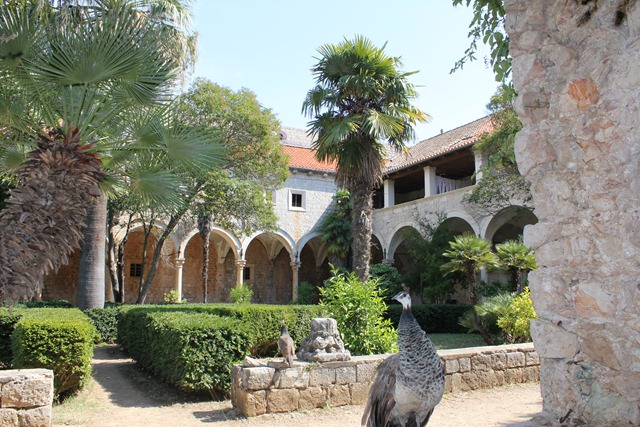
Discover the stylish islands of the Dubrovnik archipelago , like Korčula with its old town of Koručula - one of the best preserved medieval towns on the Mediterranean, this walled city grooved with a succession of narrow streets that branch off the spine of the main street like the fish bone. The architecture in the Old Town is mainly influenced by Venetian Renaissance .The Old Town center is dominated by the splendid St Mark’s Cathedral Find more about local legend of Marco Polo and take a panoramic vista of Korčula from the tower of his house. On the island of Mljet , the most richly wooded island in the Adriatic, there is a Mljet National Park , the oldest marine protected area in the Mediterranean, renowned for its deep bays, Large and Small lake, lush and diverse Mediterranean vegetation and rich cultural heritage, with a twelfth-century Benedictine Monastery on the island of St. Mary. From Dubrovnik, within 10 minutes by boat you will find the Island of Lokrum, the Nature Reserve, inhabited since prehistoric times where you can discover many horticultural sites, interesting history and historic buildings. Lokrum gardens hold a special place in the Dubrovnik and Croatian heritage of park art. The Elafiti Islands is a small archipelago consisting of several islands stretching northwest of Dubrovnik. You can easily explore 3 biggest Elafiti Islands: Koločep, Lopud and Šipan. Island of Lopud is famous by its sandy beaches, Franciscan monastery, early-medieval architecture and the beautiful Arboretum. On the island of Šipan , the largest of the Elafiti islands, during the XV century many aristocratic Dubrovnik families built summer manors. Visit the amazing castle fortified by two towers. Koločep is smallest settled island famous for the fishermen, coral, pine tree, forest parks and sandy beach. Many residential and fortified buildings represent a valuable and very attractive examples of traditional architecture.



.jpg)




.JPG)